The site chose
the architect.
Carlos Maia and the Tetro team were brought in before there was even a site to build on. The client — whose name, wisely, remains private — approached them with a brief that was both impossible and perfect: find me a plot in Nova Lima with "abundant nature." Together, they searched. Together, they found a hillside in the forested southern suburbs of the city, occupied by a rundown house, divided by old stone terrace walls, threaded through with native forest, and possessed of mountain views that would make a lesser architect immediately start sketching windows.
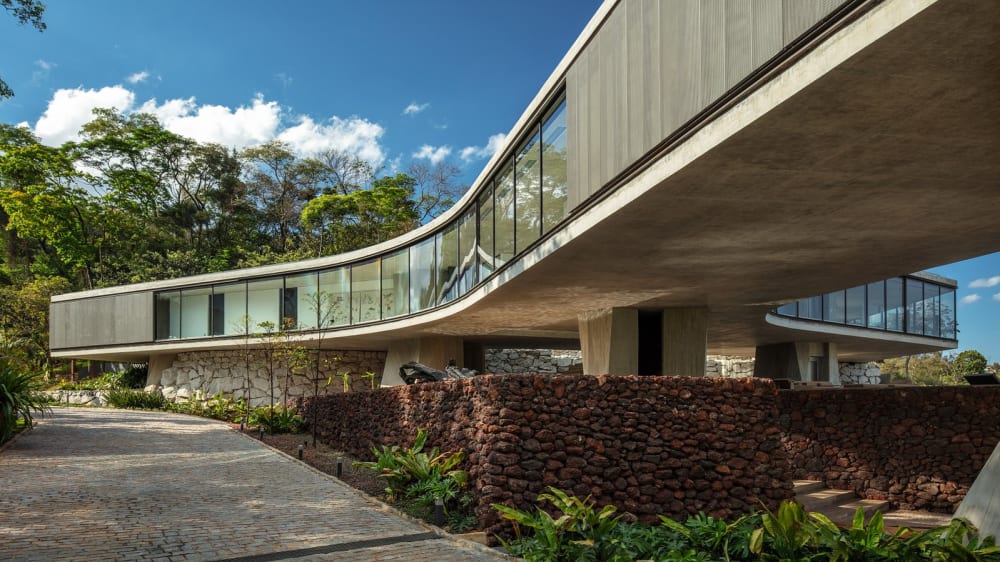
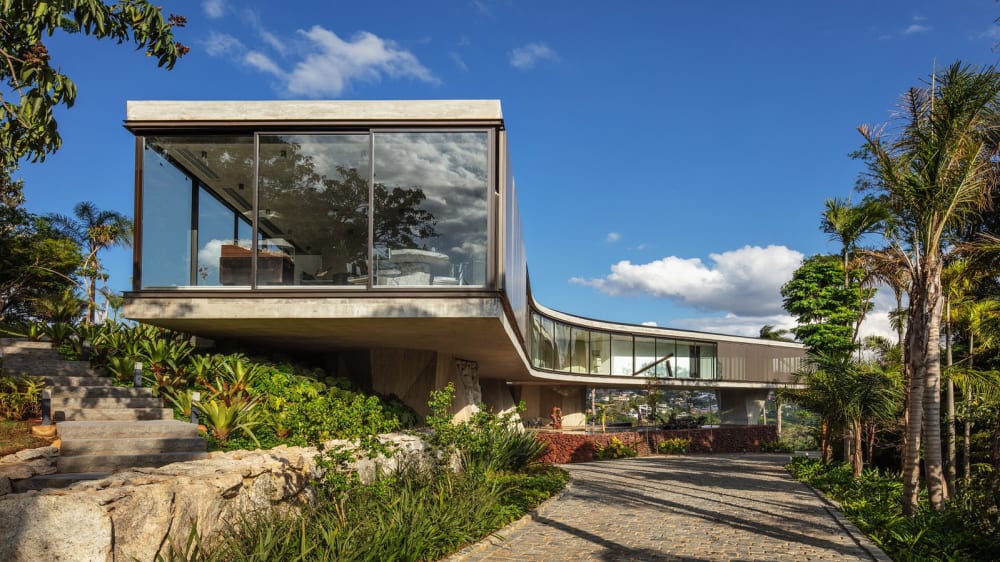
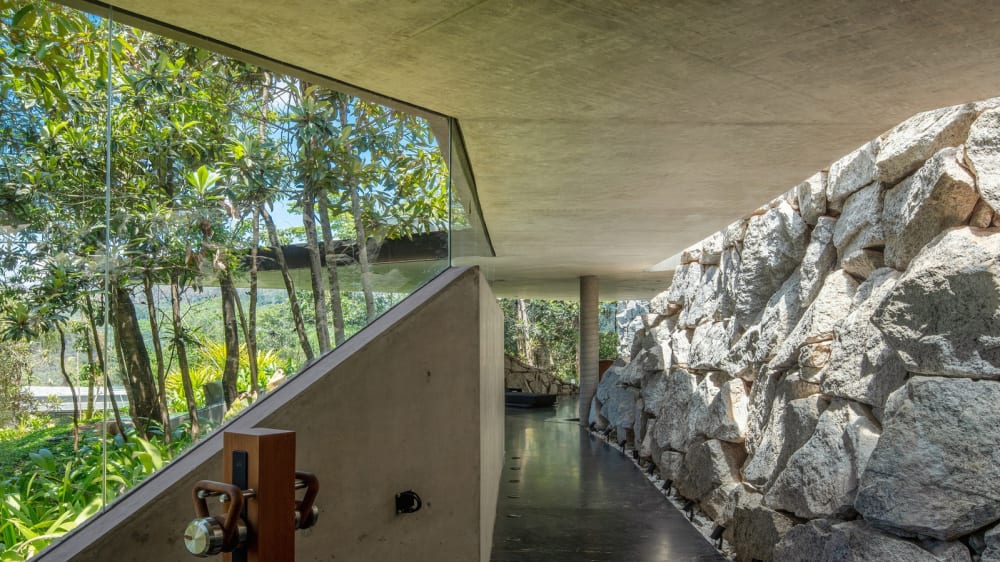
Tetro did not immediately start sketching windows. They looked at the walls. The original house was demolished — as it had to be — but the stone walls dividing the landscape into terraces were kept. This single decision is the foundation on which everything else is built: not architecturally, but philosophically. To keep the old walls is to acknowledge that the land has a history that predates the commission. It is to refuse the blank-slate arrogance that ruins most contemporary residential architecture. It is, in the precise sense of the word, an act of taste.
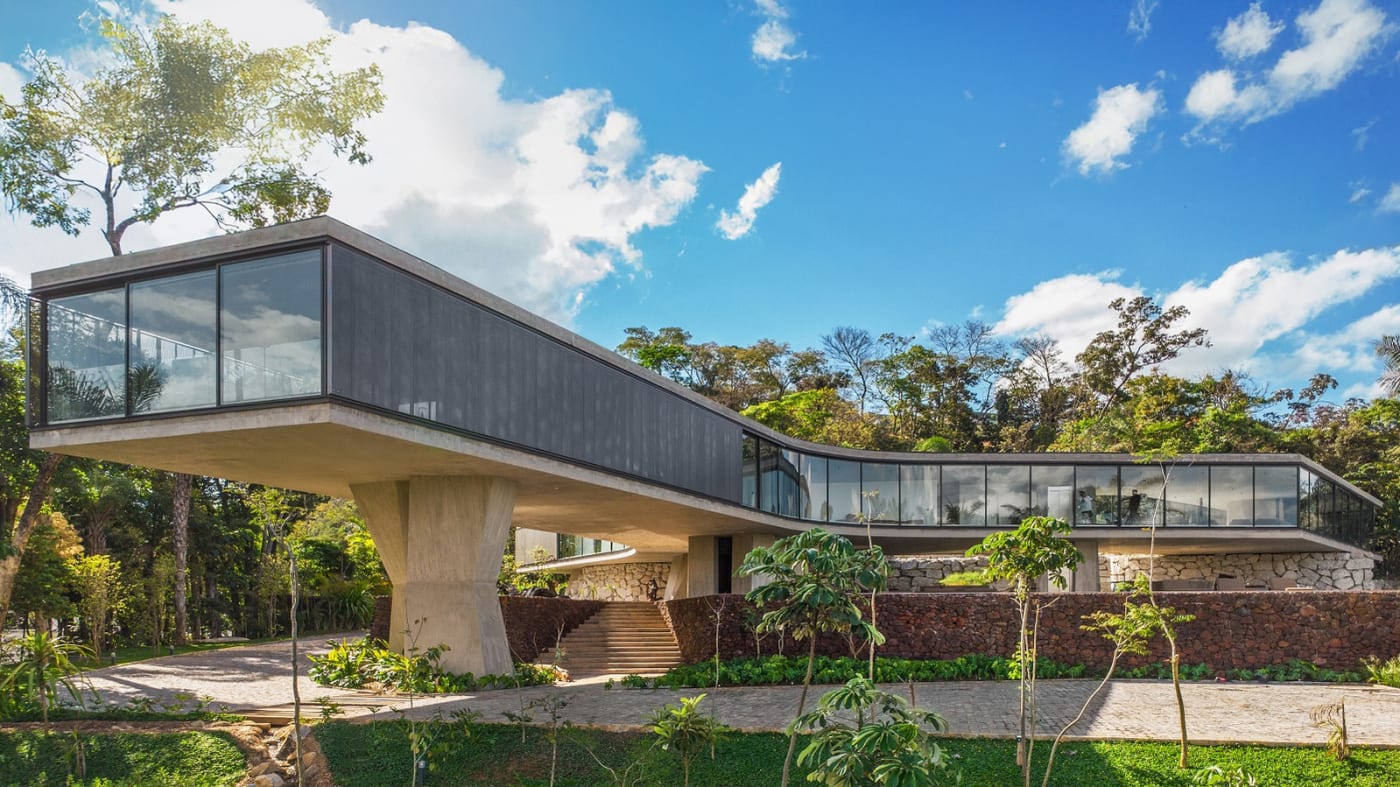
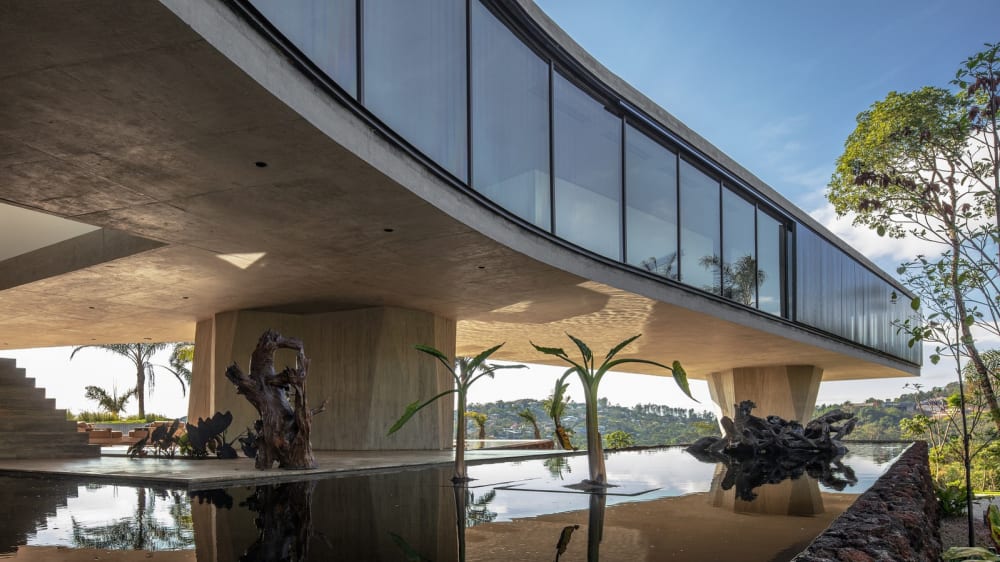
"The back embraces the jungle, while the front hangs towards the view over water mirrors." Tetro's own description of their building is more precise than anything Wallpaper managed in two thousand words. Twelve words. Every one of them doing work.
— MODUS Editorial · On Tetro's project description
The geometry
is the argument.
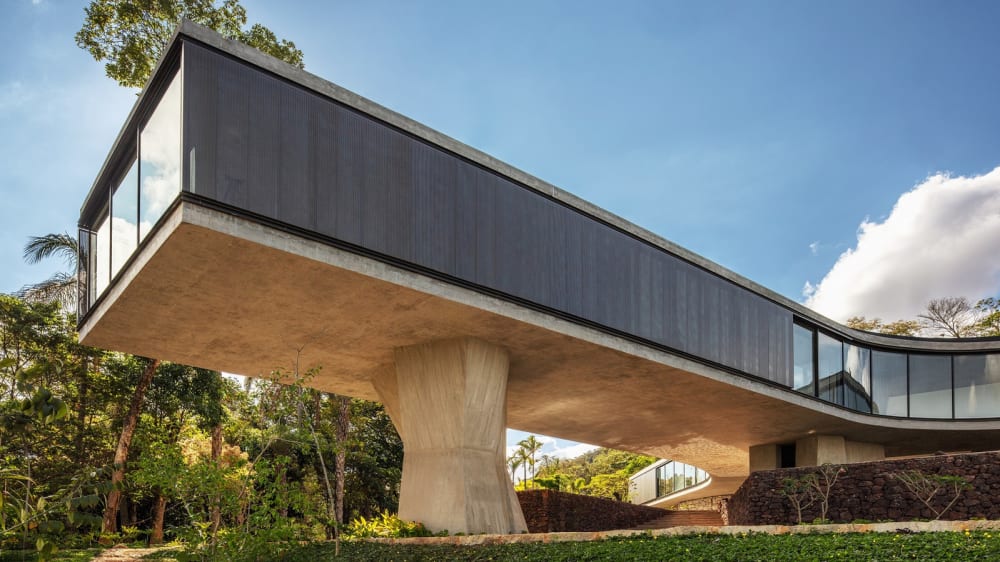
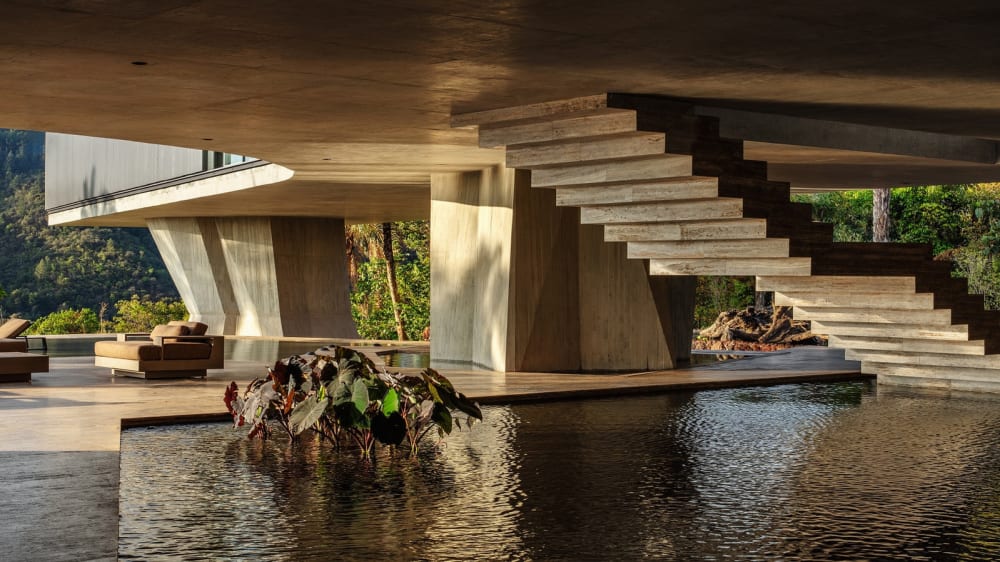
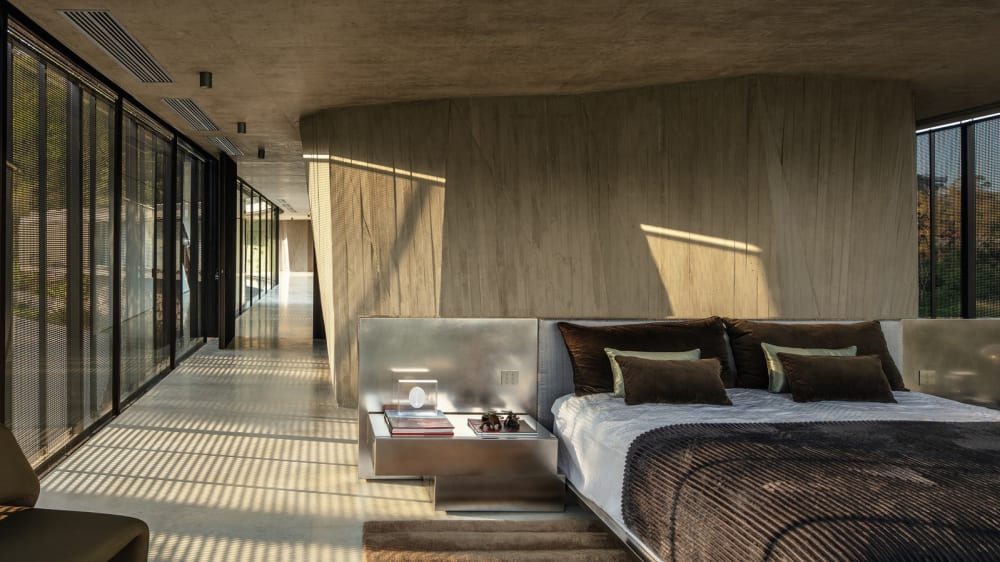
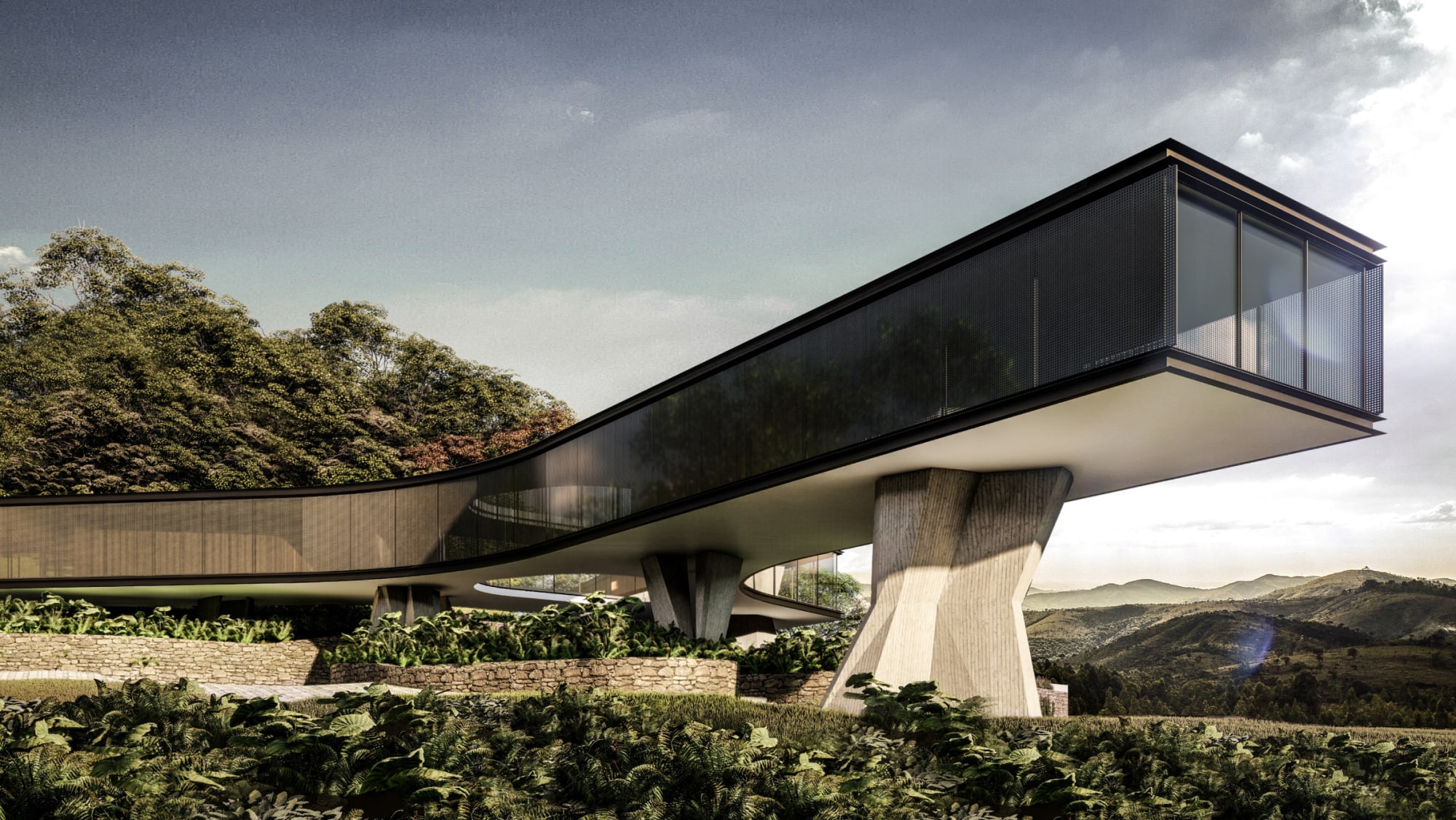
The house is organised around three wings held by six faceted concrete pillars. The pillars are not decorative. They are structural and they are philosophical — they announce that the building is elevated, held, chosen to be above the ground rather than resigned to it. One pillar contains a lift. Another contains a stairwell, its roof light transforming the climb from utility into ceremony. You do not simply go upstairs in Casa Xingu. You are ushered through a column of light into another register of the building.
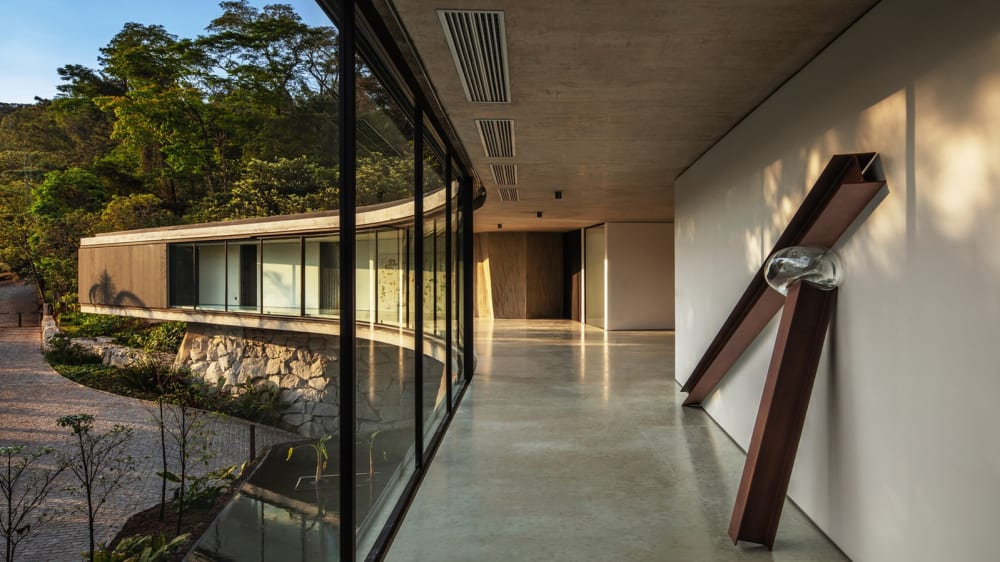
The primary living wing is fully glazed and projects over the landscape. Below it: reflecting pools, outdoor living and dining, a swimming pool, the old stone terraces. The concrete palette is brutalist in material but not in attitude. There is no rough aggregate, no performative rawness. The concrete is poured with the precision of a tailor — poured to follow a logic, not to announce one. This is the distinction that separates Tetro from the hundreds of studios currently producing concrete houses for clients who want to feel serious. Tetro does not want you to feel serious. They want the building to be serious, which is a different and far more difficult achievement.
What Wallpaper Got Right — And Where They Stopped
Bell's piece correctly identifies the cantilever as the defining gesture and notes that Tetro "started with a completely blank slate." Both are accurate. But the piece never asks why the blank slate produced this specific result — what it is about Tetro's sensibility, their relationship to Brazilian modernism, their understanding of land and material, that made this building rather than another building. Wallpaper covers the what. MODUS covers the why the what matters.
Brazilian modernism
is not a reference. It is a bloodline.
To understand what Tetro built at Nova Lima you have to understand what Brazil did to modernism. When Niemeyer and Costa delivered Brasília — when Lina Bo Bardi built the MASP on its red concrete pillars above Avenida Paulista — they were not applying European theory to a new geography. They were doing something more radical: they were insisting that the formal language of modernism could carry heat, vegetation, colour, the specific quality of Brazilian light, the specific weight of Brazilian earth. They succeeded. The result is a tradition that is not derivative of European modernism but is in conversation with it, often winning the argument.
Casa Xingu is an inheritor of this tradition. The cantilevered volume over the landscape is Niemeyer's gesture updated by forty years of structural engineering and thirty years of ecological awareness. The retained stone walls are Lina Bo Bardi's insistence on the historical object as something to be preserved and inhabited rather than cleared. The cave — the literal grotto in the hillside that will house the wine cellar and cheese-making room — is Brazil's refusal to separate pleasure from architecture, to treat the sensory life of a building as secondary to its formal agenda. It is not secondary. At Casa Xingu, it is primary.
"The cave is where the wine lives and the cheese is made. That single sentence contains more architectural intelligence than most buildings deliver in their entirety."
— MODUS Editorial · On the Xingu grotto programme
The score.
Why perfect.
MODUS scores on five axes: Timelessness, Spatial Intelligence, Material Conviction, Site Responsiveness, and Cultural Depth. Casa Xingu scores ten on all five. This requires explanation, because a perfect score is not a superlative. It is a statement that the building has fully resolved the problems it set itself — that the gap between intention and execution has been closed, that the building is what it intended to be, completely.
Timelessness: the building will not date because it does not reference a trend. It references a hillside, a forest, a tradition, and a material. These do not date. Spatial Intelligence: every transition in the house — from approach to entry, from entry to living, from living to the cantilevered primary suite — is a considered act of spatial argument. Material Conviction: the concrete, the glass, the stone walls, the reflecting pools are not a palette. They are a position. Site Responsiveness: the building cannot be anywhere else. It is specifically and irrevocably this hillside in Nova Lima. Cultural Depth: the grotto, the retained walls, the relationship to the Atlantic forest — Casa Xingu knows where it is in Brazilian history and in Brazilian nature. It has an answer to both.
The drafted version of this review withheld one point — the logic being that perfect scores should require a flaw. We reconsidered. The flaw in that logic is that it makes the score about the reviewer's need for nuance rather than the building's achievement. Casa Xingu does not have a weak argument. Awarding it 49 to preserve our critical posture would be the kind of gesture Wallpaper makes. We are not interested in that gesture.
50 / 50.